
A Field Guide to the Wrong Planet
An invitation to the neurodivergent community

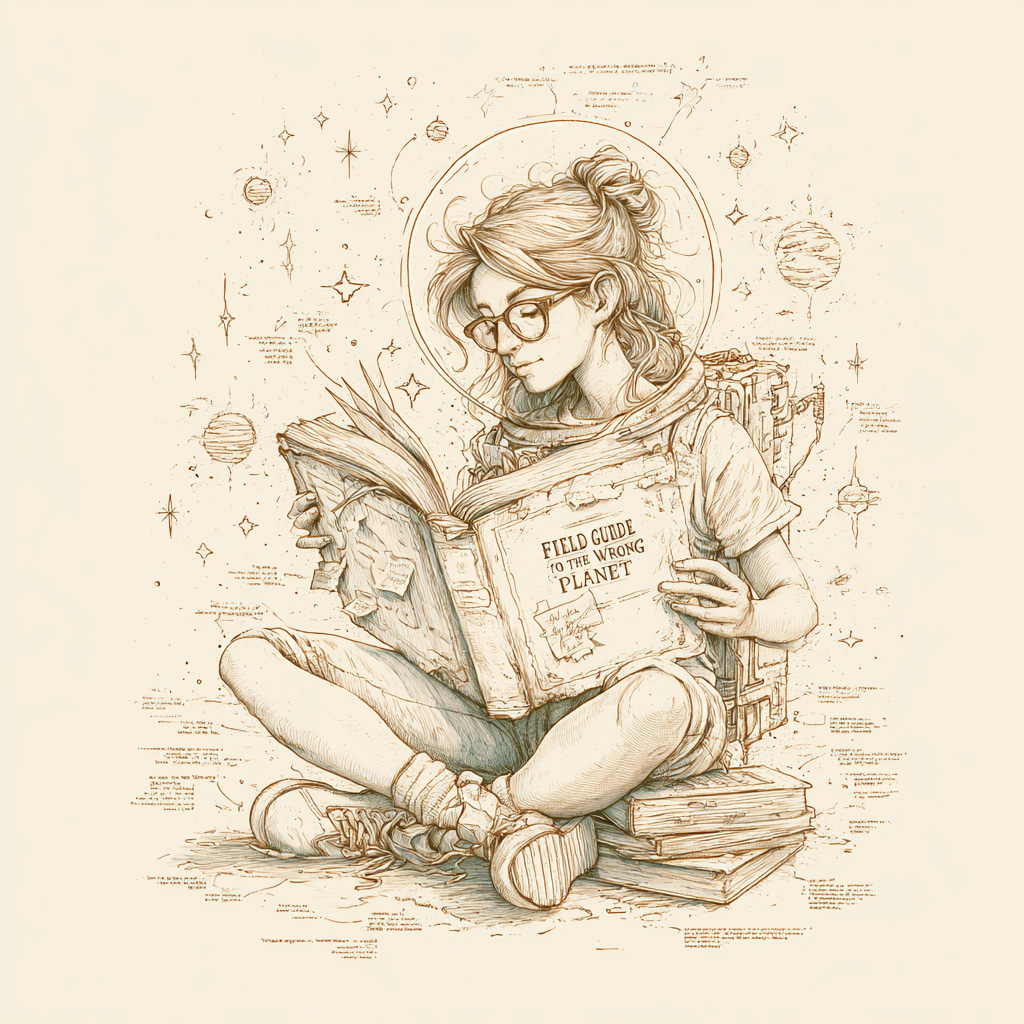
Help me write this thing
For the past two years, I’ve been writing a book.
It started the way most of what I do starts: sideways.
One handout for a client became a longer article. One article became a chapter. One chapter became an outline for a book that kept getting bigger as I realized how much there was to say — and how little of it had been said the way I wanted to say it.
The working title is A Field Guide to the Wrong Planet: From Surviving to Thriving as a Neurodivergent Adult.
I’m writing it for people like the ones I see in my practice: late-identified adults who found out we are autistic, or ADHD, or both — and got the label without getting the user’s manual. Or, who were diagnosed young and never got effective help, just the label itself.
People who spent decades wondering why certain things were so much harder for us than they seemed to be for everyone else.
I’m one of those people. I was identified as autistic at 56, after a career as an investment banker and management consultant, a midlife pivot to becoming a therapist, and years of working with neurodivergent clients while not yet knowing I was one myself.
This book is, among other things, the operating manual I wish someone had handed me.
But here’s the thing about operating manuals
No universal manual exists for a vehicle as individual as a neurodivergent nervous system. What I am trying to offer is a framework for building your own — through guided trial and error, through understanding what’s actually happening in your system, and through the stories of people who’ve already walked different versions of this road.
That’s where you come in.
I’m inviting readers, clients, podcast listeners, and the wider ND community to contribute to this book — not just as an audience, but as co-contributors. Your stories, your hard-won knowledge, your questions that haven’t been answered yet. All of it has the potential to make this book better, richer, and more genuinely useful than anything I could write alone.
What I’m looking for:
Your experience — what neurodivergence has actually been like, in your own words
What’s missing — topics or questions you wish someone would write about honestly
What has helped — strategies, reframes, discoveries that changed something for you
What hasn’t helped — the well-meaning advice that made things worse
What you’d tell your younger self — or what you wish someone had told you
In other words: your shared wisdom. And a coming-together, as a community.
How this works
I’ve built a contribution portal — a multi-page form where you can share your experience across the topics covered in the book.
Every question is optional. You answer what resonates and skip what doesn’t. There are no wrong answers and no minimum length.
The only two things I ask for are a name to call you by (which can be a pen name, initials, a first name, or anything you choose), and which forms of neurodivergence you identify with. Everything else is up to you. You control how your contribution is attributed.
Here’s the link: https://tally.so/r/7RE8ga
The form takes 5–30 minutes, or possibly longer, depending on how much you want to share. Come back and add more any time.
A few things worth saying clearly
This book has a positionality section. I’m a white, cisgender, heterosexual man, and I’m aware that my experience of neurodivergence is shaped by those privileges in ways I don’t always see clearly. If your experience has been shaped by race, gender identity, sexuality, class, disability, or any other dimension of your life that I haven’t experienced, your perspective is especially valuable here. I’m actively looking for it.
Contributors who provide substantial material will be acknowledged in the book. Contributors whose material is directly quoted or paraphrased will be acknowledged as they choose and offered a complimentary copy. I’ll be transparent about this as the book takes shape.
There’s also an element of potential exploitation to be named. I’m asking for your stories and you contributions to a work that, ultimately I hope to profit from. If this works out well, I do (honestly) hope not just to elevate our collective voice as a community, and as a spokesperson for that community, but to find a way to survive better myself in this crazy world.
I have no intention of exploiting anyone. So, in return for your contributions, I offer several options at the end of the questionnaire, as appreciation for your help.
With genuine gratitude,
David
K. David Smith, LCSW, CASDCS, CCTP, CFTP
Thriving Family Therapy · thrivingfamilytherapy.com
I'm so glad it saves responses between sessions. I'm still working on it but I wouldn't have a chance if I had to do it all at once.
I'm currently in burnout and my writing can be an incredibly slow and overly deliberative process. Like how long it took me to write that sentence, for example.
I love this David. Happy to assist in any way I can! 💛